
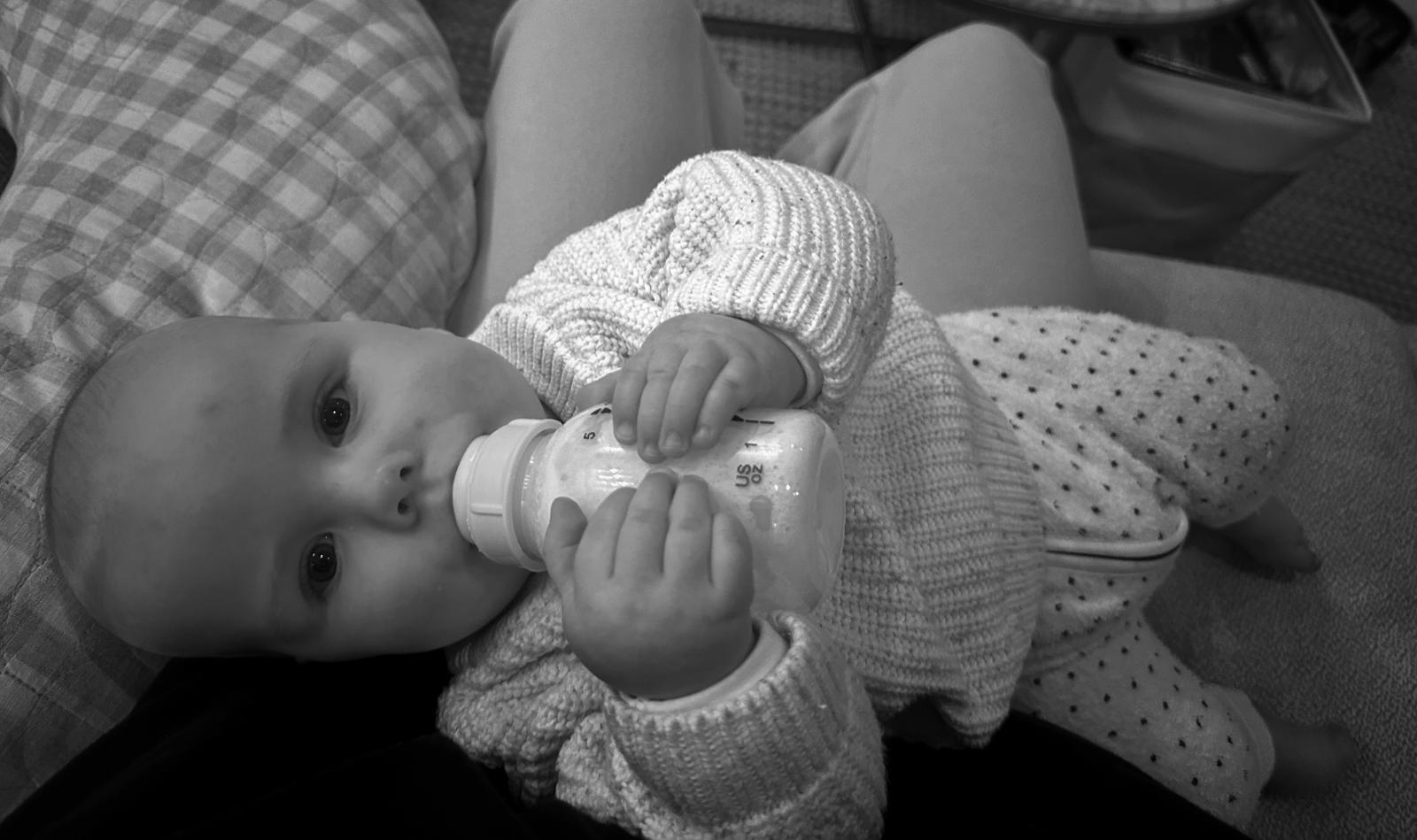
You've done everything right - warmed the milk, tried a few different teats, timed it for when they're not overtired - and they still turn their head away, arch their back, or cry the moment the bottle touches their lips. Meanwhile the calendar has a return-to-work date circled, and the pressure is mounting.
Bottle refusal is common, rarely permanent, and usually has an identifiable reason behind it once you know what to look for.
The usual culprits
- Being offered the bottle by the breastfeeding parent - many babies simply refuse when the person they associate with breastfeeding is holding it, even if everything else is right
- Timing - trying it when a baby is already very hungry and frustrated, or not hungry at all, rather than in a calm, moderately-hungry window
- Teat flow that's mismatched to what they're used to - too fast can overwhelm, too slow can frustrate
- Temperature or taste differences, especially with expressed milk that's been frozen, or a switch to formula
- A general preference for the breast that's more about comfort and closeness than the mechanics of feeding
What tends to help
- Having someone other than the breastfeeding parent offer the bottle, ideally from another room, at least for the first several attempts
- Trying it during a calm window, not at the peak of hunger or overtiredness
- Experimenting with temperature, position (upright, semi-reclined), and teat shape rather than assuming it's one fixed problem
- Letting the baby explore the teat at their own pace rather than pushing it in - some babies do better holding and mouthing it first
- Trying a cup or spoon of expressed milk as an alternative if the bottle itself is the sticking point
How much time to actually give it
If a return to work or a break away is approaching, starting the introduction 2-4 weeks ahead gives enough room for a few different approaches without last-minute panic. A single failed attempt doesn't mean it won't work - most babies who initially refuse do eventually take a bottle, though a small number hold out until someone other than mum is offering it out of genuine hunger.
It's worth accepting that this can take longer than expected, and that's not a reflection of anything being done wrong.
If it's still not budging
Persistent refusal, especially alongside reduced wet nappies or weight concerns, is worth raising with a GP, paediatrician or lactation consultant rather than continuing to troubleshoot alone - there's a difference between a baby working through a preference and a baby not getting enough intake.
Most of the time, this resolves with a bit of patience, a change of who's holding the bottle, and a few different approaches tried without pressure. Babies are more adaptable than the panic of week one suggests.