
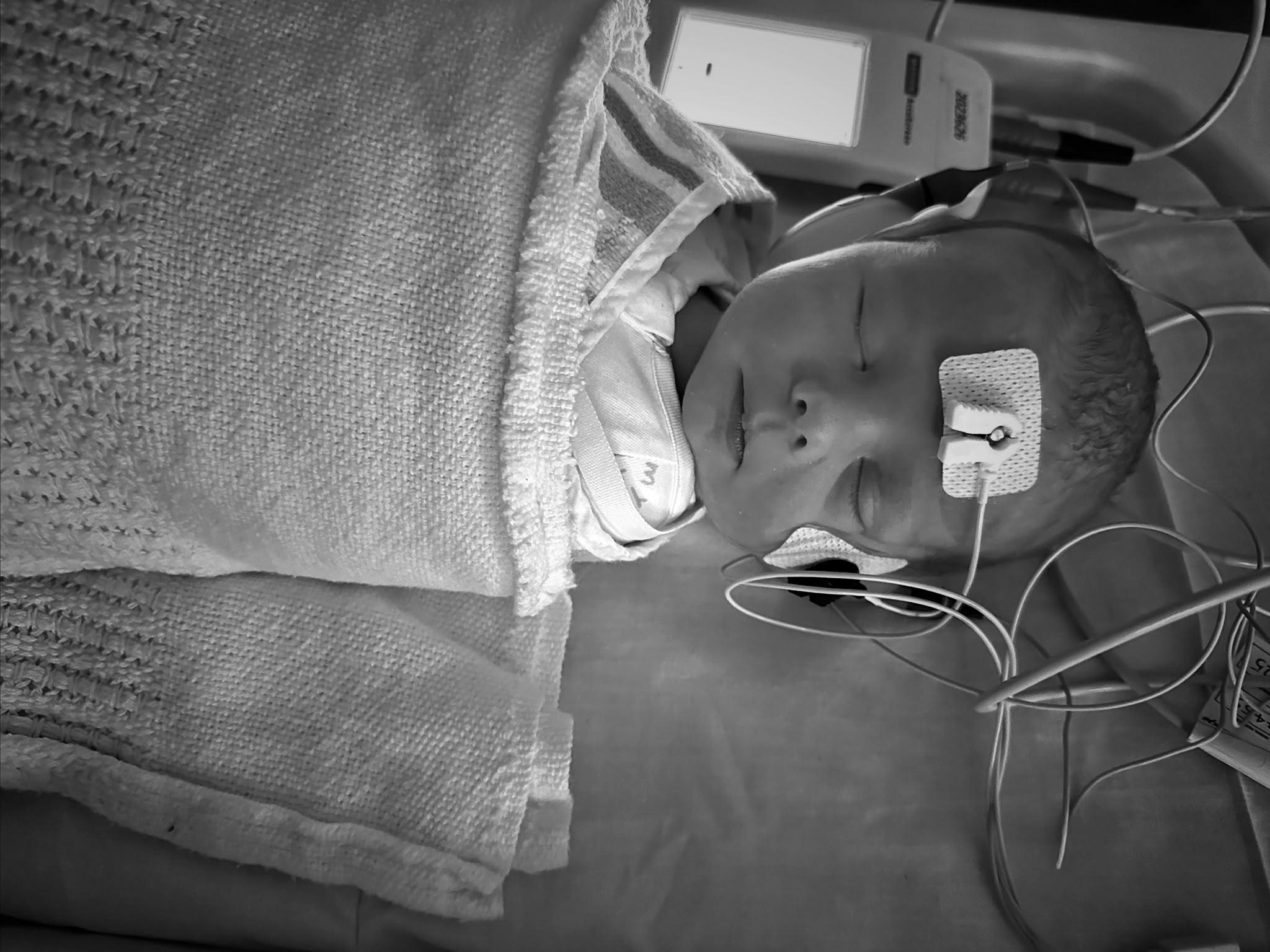
Somewhere around day two or three, a midwife holds your baby up to the window, presses a finger gently into their skin, and says the word jaundice for the first time. It's an alarming word to hear about your two-day-old, mostly because nobody explained it beforehand.
It's also extremely common - more than half of all newborns show some degree of it. Here's what's actually happening under that golden tinge.
What it actually is
Jaundice happens when a substance called bilirubin builds up faster than a newborn's liver can process it. Bilirubin is a normal byproduct of red blood cells breaking down, and adult livers clear it easily - but a newborn liver is still getting up to speed, so a temporary backlog is common and, in most cases, entirely harmless.
It usually appears first on the face, then can move down the chest and body as levels rise, which is why the check involves pressing gently on the skin to see the colour underneath.
The usual timeline
- Physiological jaundice (the common kind) typically appears day 2-3 and peaks around day 4-5
- It usually resolves on its own within 1-2 weeks as the liver catches up
- Breastfed babies can run a slightly longer, milder course - sometimes called breastmilk jaundice - which is generally not a reason to stop breastfeeding
- Jaundice appearing in the first 24 hours of life is different and always warrants prompt review, as it points to a different underlying cause
What the heel prick and blood tests are checking
If jaundice is visible, hospital staff will often measure bilirubin levels - sometimes with a light sensor placed on the skin, sometimes with a small blood sample from the heel. The number matters less on its own than in combination with your baby's age in hours and their risk factors, which is why the result is plotted on a chart rather than read as a flat pass or fail.
Levels that climb into a higher range for their age are usually treated with phototherapy - special blue light that helps the body break bilirubin down faster - either in hospital or, in milder cases, with a portable light blanket at home.
What to actually watch for at home
- Yellowing spreading to the arms, legs, or the whites of the eyes
- A baby who is unusually sleepy, hard to wake for feeds, or feeding poorly
- Fewer wet or dirty nappies than expected
- Jaundice that seems to be getting more yellow rather than less past day 5-7
- Any of these are worth a same-day call to your midwife, MCH nurse, or GP - not a wait-and-see
The reassuring part
For the vast majority of babies, jaundice is a passing, well-understood stage of a liver getting up to speed - not a sign that anything went wrong. It's monitored closely precisely because it's common, not because it's usually serious.
If in doubt, get it checked. That's what the appointments are for, and 'probably fine but let's just look' is a completely reasonable reason to call.