
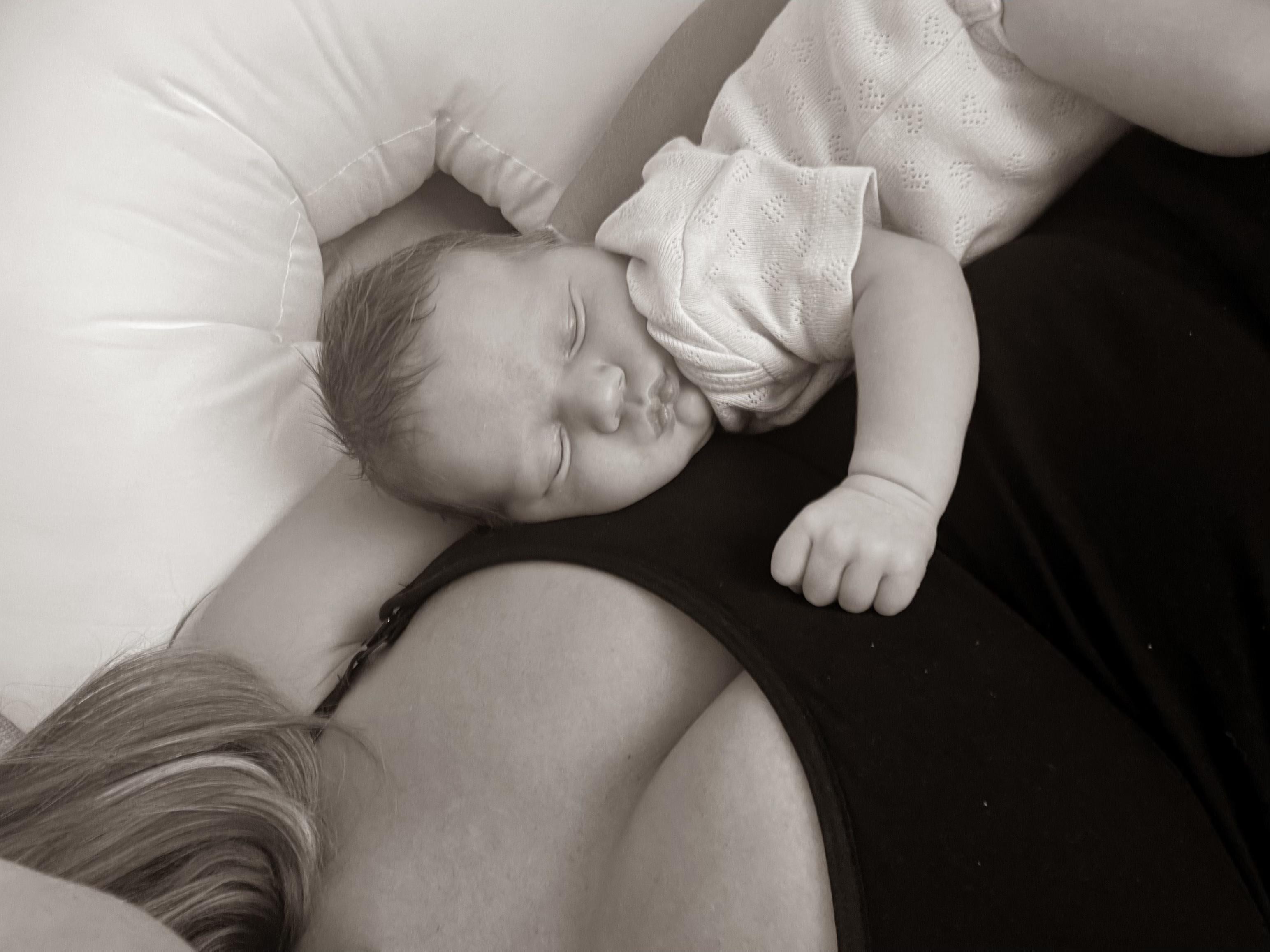
You'd found a rhythm. Maybe not perfect, but workable - a few solid stretches, a nap that reliably happened. Then, seemingly overnight, all of it fell apart. Frequent waking, short naps, a baby who seems to fight sleep they clearly need.
This is the so-called 4-month regression, and the name is slightly misleading - it's less a temporary dip and more a permanent upgrade to how your baby's sleep works.
What's actually happening
Around 3-5 months, babies' sleep architecture matures from a simpler newborn pattern into an adult-like cycle of light and deep sleep stages. That's a genuine developmental leap - but it comes with a side effect: your baby now briefly surfaces to lighter sleep between cycles, the same way adults do, and at this age they don't yet have the skills to drift back down on their own.
This is why it's often described as not reversing - because it isn't a temporary glitch that resolves by itself. What resolves is your baby gradually learning how to settle themselves back down between cycles.
What it tends to look like
- Waking every 45 minutes to 2 hours overnight, often needing help to resettle each time
- Naps that used to last an hour dropping to 20-30 minutes
- More fussiness and difficulty settling at bedtime
- A baby who seems more alert and engaged during awake windows - the flip side of the same developmental leap
What genuinely helps
- A consistent, simple pre-sleep routine, so their body starts recognising the cues for sleep, not just the environment
- Watching awake windows rather than the clock - an overtired baby fights sleep harder, not less
- A dark, cool, white-noise-supported sleep space, which supports the transition between sleep cycles
- Giving them a brief pause before rushing in at every stir - some resettling happens on its own, even if it doesn't feel like it will
What this is not
It's not a sign you've done anything wrong, and it's not a signal that solids, a sleep-training method, or a different mattress will make it vanish overnight. It's neurological development happening on schedule, showing up as a very disrupted few weeks.
Most families see things ease within 2-6 weeks as babies get some practice linking sleep cycles - not because the regression itself ends, but because the new skill catches up.
The reframe that helps most
This stretch is hard specifically because it's not a malfunction - it's your baby's brain doing something genuinely new, badly, before it does it well. That's true of most developmental leaps; this one just happens to land squarely on your sleep.
It passes. Not by waiting it out unchanged, but by giving them the conditions to practise the new skill - and by accepting that a few rough weeks here don't undo the good sleep that came before, or the sleep that's coming.