
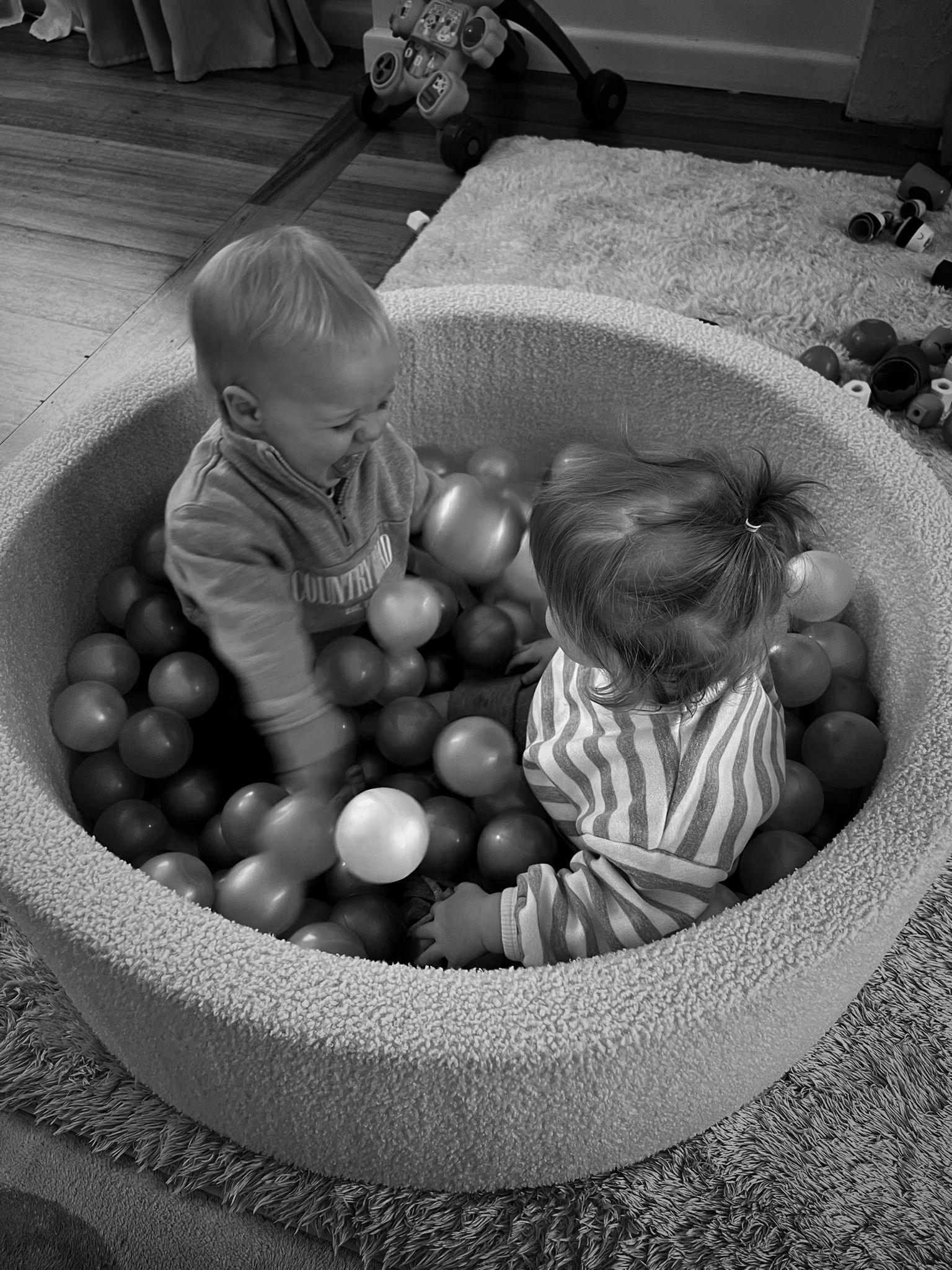
I have 847 photos from my daughter's first month. I couldn't tell you what most of them are - blurry onesies, the top of her head, one very unflattering angle of me at 4am.
But I have one voice note. Thirty-two seconds. Her making that small, grunty, newborn sound she made when she was milk-drunk and falling asleep on my chest.
I would delete every photo before I deleted that.
Why we over-photograph and under-capture
The camera is easier than the moment
- We reach for the phone because it feels like doing something - preserving, being responsible
- But photos flatten the moment into a single frame; they can't hold the smell, the weight, the sound
- The sounds of babyhood are the first things we forget - the specific cry, the feeding sounds, the first laugh that catches you off guard
- We don't think to record audio because nobody tells us to. It feels less "official" than a photo album.
What's worth capturing in sound
A list you'll wish you'd had earlier
- The newborn grunts and snuffles (gone by week 6)
- First proper giggle - not a smile, the giggle
- Babbling before it turns into words
- First recognisable word - and the mispronounced version that comes just before the real one ("baba" before "bottle")
- Them saying your name for the first time
- Bedtime sounds - the settling, the sighing, the breathing that slows into sleep
- You, talking to them - your voice explaining the world, your made-up songs, your shhh sounds at 3am
The memory science (light touch)
Why sound unlocks memory differently than images
- Auditory memory is processed differently in the brain - sound is more directly tied to emotion and recall
- A photo shows you what something looked like; a sound can make you feel like you're back there
- Studies on autobiographical memory suggest that unexpected sensory triggers (a smell, a sound) are among the most powerful memory retrieval cues
- This is why hearing a song from your childhood hits differently than seeing a photo from the same era
The PAM memories feature
A place for the sounds that don't fit in a photo album
- Introduce the voice note feature as a direct response to this gap
- Stored alongside milestones and notes, so the context is preserved - not just a file sitting in your camera roll with no date or caption
- The difference between a voice note lost in your phone and one that lives inside a memory, tagged to an age, a week, a moment
- You can add a note alongside it: "This is the sound she made every single time she finished a feed. I never want to forget it."
A note on imperfection
You don't need to be ready
- The best ones are accidental - caught mid-giggle, mid-word, mid-something
- You don't need to announce "I'm recording now" or set up the scene
- Background noise is fine. The dishwasher running. Your other kid in the background. That's the texture of real life.
- Future you doesn't care about audio quality. Future you just wants to hear it again.
Thirty-two seconds. Milk-drunk, grunty, already almost asleep.
She's four now. She hasn't made that sound in years. I didn't know when I recorded it that it would be the last time I heard it - you never do.
Open PAM. Press record. You don't need a reason.