
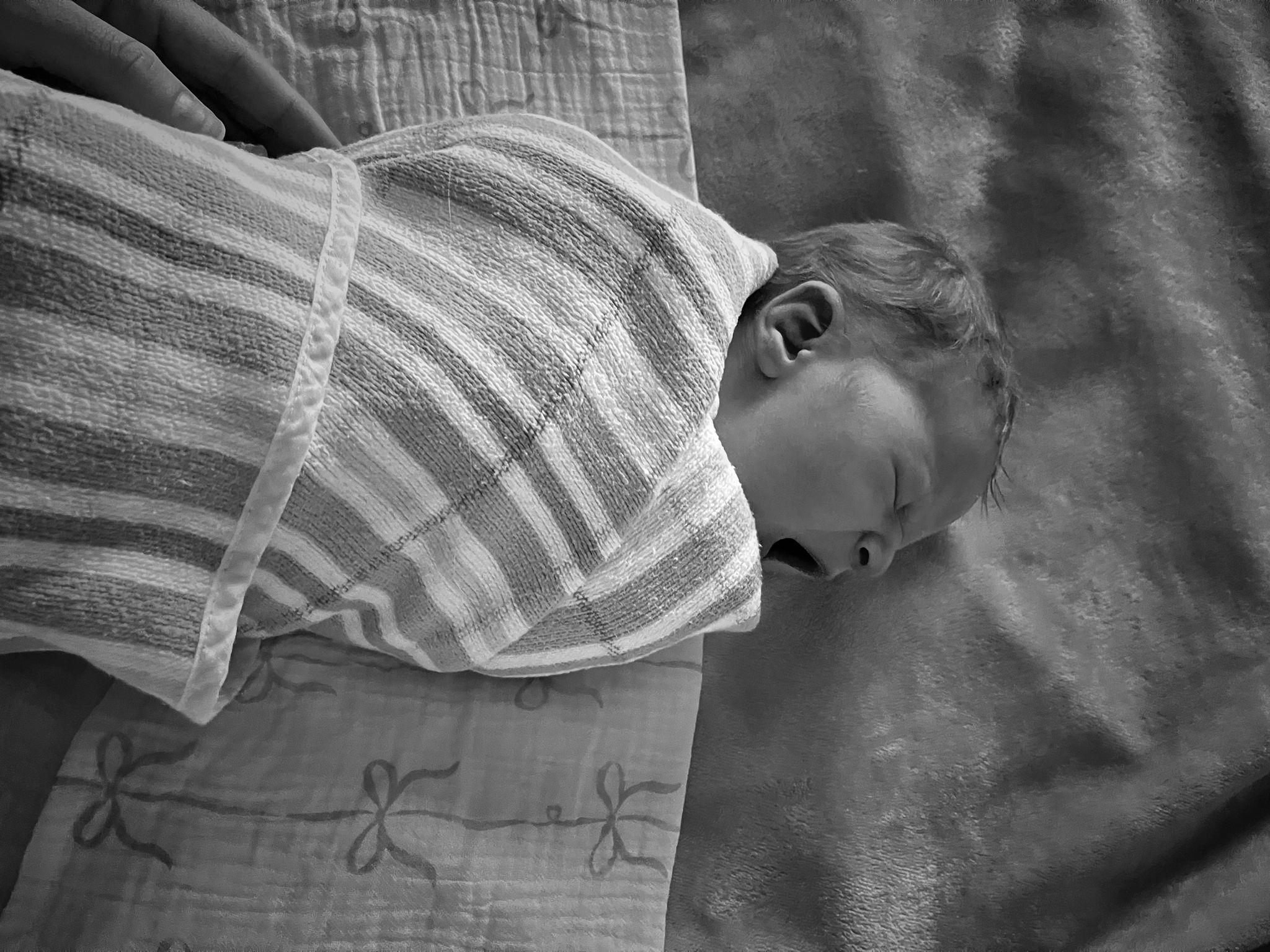
The first night home, I watched my baby breathe for four hours. Not because I was enchanted. Because I was terrified she was going to stop.
Nobody had told me that newborns breathe like tiny, malfunctioning machines. That they pause. That they grunt. That they make sounds like a piglet, a creaky door, and a small overwhelmed person - sometimes all in the same breath.
If you've found this article at 1am with your face six inches from your baby's chest, this is for you.
First, the reassuring part
Newborn breathing is genuinely strange, and genuinely normal. Their respiratory system is brand new. It has never done this before. It is figuring things out in real time, and that process looks and sounds alarming to a new parent who is used to adults, who breathe quietly and predictably and without drama.
Most of what you're about to read is not an emergency. But knowing what's normal is what lets you recognise when something isn't - and that knowledge is worth having at 1am.
What normal actually looks like
- Periodic breathing - newborns regularly pause their breathing for up to 10 seconds, then resume normally. This is completely normal in the first few weeks and happens because the part of the brain that regulates breathing rhythm is still maturing. If your baby pauses, breathes again, and their colour stays normal - this is not an emergency.
- Fast breathing - newborns breathe much faster than adults, anywhere between 40 and 60 breaths per minute when awake or feeding. That's roughly one breath per second. Count it sometime - it will seem impossibly fast, and it's fine.
- Chest and belly movement - unlike adults who breathe mostly from the chest, newborns breathe from their belly. You'll see their stomach rising and falling significantly with each breath. Their chest will also move, but the belly leads.
- Flaring nostrils - newborns are obligate nose breathers and instinctively breathe through their nose rather than their mouth. Mild nostril flaring is their body working hard to move enough air. In isolation, it's normal. Combined with other signs below, it can indicate distress.
What normal actually sounds like
This is the part nobody warns you about. Newborns are noisy breathers.
- Grunting - especially during sleep and after feeding, as they process wind and adjust digestion. Newborn grunt syndrome is a real thing, it has a name, and it will keep you awake even though the baby is fine.
- Snuffling and snorting - their nasal passages are tiny and easily congested. Breast milk, amniotic fluid, and general newborn existence means there's often something partially blocking the airway. A saline nasal spray and a bulb syringe will become your best friends.
- Wheezing or rattling - often just mucus in the upper airway. If it clears after a cough or cry and doesn't return, it's usually not concerning.
- Sighing - yes, they sigh. Deeply and dramatically. It is somehow both alarming and completely adorable.
When to actually be concerned
This is important. Normal newborn breathing is variable and noisy. The following signs are different - they indicate your baby is working harder than they should to breathe, and you should seek help promptly:
- Breathing consistently faster than 60 breaths per minute while at rest
- Grunting at the end of every breath (not just during sleep - constant expiratory grunting is a sign of respiratory distress)
- Skin pulling in visibly between the ribs or at the base of the throat with each breath (called retractions)
- Nostril flaring combined with any of the above
- Colour changes - blue or grey lips, tongue, or fingernails
- A breathing pause that lasts longer than 20 seconds, or a shorter pause accompanied by a change in colour or limpness
The 4am rule
If you see any of these, trust your instincts and get help. Call your midwife, call your maternal health nurse, or call 000. You are not overreacting.
Here's something worth keeping: if you're unsure whether what you're seeing is normal, and your gut is telling you something is wrong - act on that. You know your baby. You have been watching them more closely than any monitor. A worried parent calling a health line at 4am is not an inconvenience. It's exactly what those services are for.
PAM's resources tab has direct links to your state's maternal health line - the number worth having saved before you need it.
One last thing
That first night I spent watching my daughter breathe? I didn't know any of this. I didn't know about periodic breathing or obligate nose breathing or why she sounded like a small farmyard animal.
I just watched, and worried, and loved her so much it was its own kind of pain.
You're going to be okay. She's going to be okay. And now you know what you're listening for.